If you have ever driven through San Jose and wondered why Willow Glen feels so different from the rest of the city, you are not imagining it. This neighborhood has a way of slowing things down, with tree-lined streets, a true main street, and a long local history that still shapes daily life. If you are thinking about buying, selling, or simply getting to know Silicon Valley neighborhoods better, understanding Willow Glen can help you see why it stands out. Let’s dive in.
Part of what gives Willow Glen its small-town character is that it was not built as a recent master-planned neighborhood. According to City of San José historical materials, the community dates back to a school district in 1863, with a business district already taking shape by the 1890s.
That same city history notes the post office was renamed Willow Glen in 1895, the area incorporated as a separate city in 1927, and it was later annexed to San José in 1936. Even after annexation, Willow Glen kept a distinct identity, including its own business district and a quieter residential feel.
This kind of history matters because it creates a neighborhood identity that feels earned over time. By the 1890s, trees already lined what is now Lincoln Avenue, which helps explain why Willow Glen feels established rather than newly assembled.
Many neighborhoods have shopping areas, but Willow Glen has something closer to a traditional downtown. The Willow Glen Neighborhood Business District runs along both sides of Lincoln Avenue between Coe Avenue and Minnesota Avenue, with mostly one- to three-story buildings.
That low-rise scale makes a big difference. Instead of a corridor dominated by larger mixed-use projects or heavy commercial frontage, Lincoln Avenue feels compact, approachable, and easy to experience on foot.
The Willow Glen Business Association describes downtown Willow Glen as a walkable district with a small-town feel, along with cafes, shops, boutiques, and convenient parking. For buyers, that often translates into a neighborhood where errands, coffee stops, and weekend outings can happen close to home.
The atmosphere is also supported by public improvements. The City of San José reports that business district funding has helped support sidewalk cleanliness, planters, banners, murals, sculptures, and updated LED lights, all of which reinforce the area’s pedestrian-friendly setting.
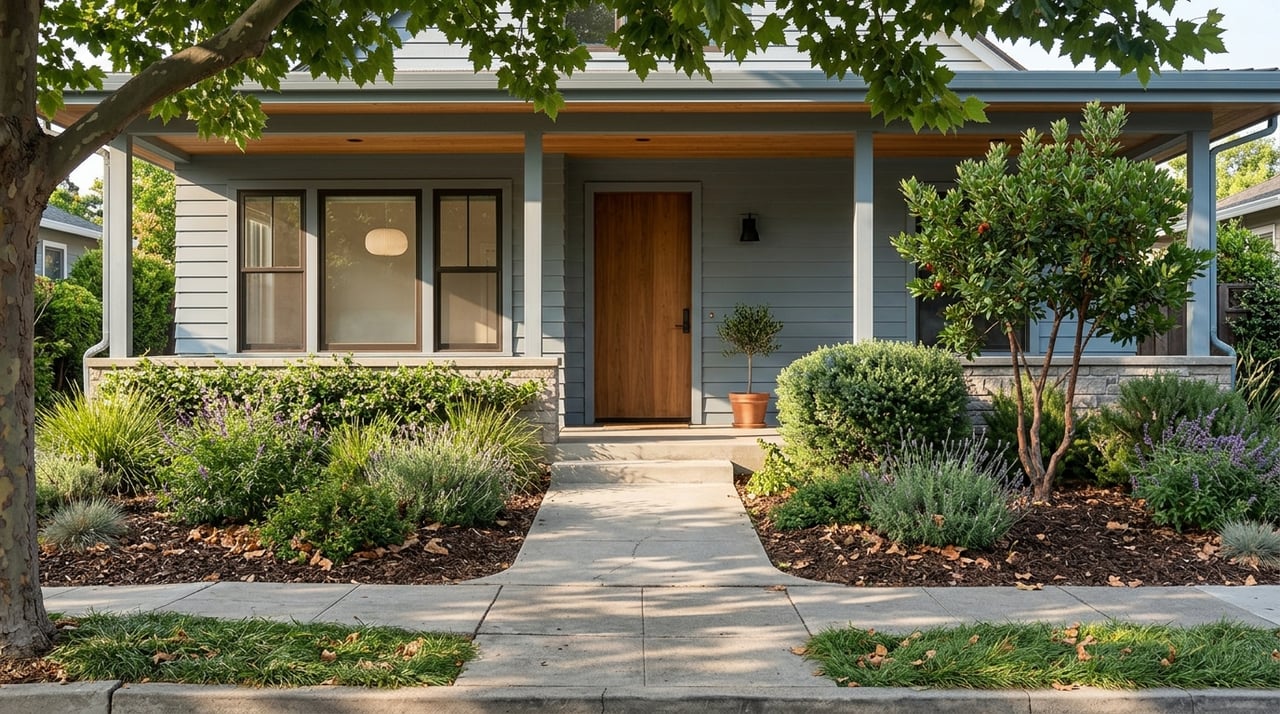
Another reason Willow Glen feels like a small town is the housing itself. In many parts of San Jose, you will see areas shaped by more recent development patterns, but Willow Glen includes older, smaller-scale residential streets that feel more layered and personal.
The city’s historic areas and districts information describes North Willow Glen as mostly small-lot residential property developed during the first half of the twentieth century. The city also notes the area contains similarly massed small houses with diverse period detailing and a strong sense of earlier time and place.
Palm Haven adds another layer to that story. The same city source says this conservation area includes homes from roughly 1910, the 1930s, and the 1940s, with many designed by architects.
That mix gives Willow Glen a built-in sense of personality. Instead of a uniform tract look, you get a neighborhood with visual variety, mature landscaping, and homes that reflect different periods of local growth.
Willow Glen’s small-town appeal is not just a feeling. It also shows up in buyer demand.
According to recent Willow Glen housing market data, the median sale price was about $1.85 million in February 2026, homes sold in about 13 days, and homes received about 3 offers on average. That suggests buyers are willing to compete for the neighborhood’s combination of charm, location, and established housing stock.
For anyone considering a move here, this is an important takeaway. Willow Glen offers older homes and a lower-rise streetscape, but it still performs like a premium Silicon Valley market.
A small-town feeling usually depends on more than architecture. It also comes from the everyday places that support neighborhood life.
Willow Glen has that civic structure built in. Willow Glen Elementary is on Lincoln Avenue, while Willow Glen Middle and Willow Glen High are both on Cottle Avenue as part of San José Unified.
The official school pages note that Willow Glen Elementary serves nearly 700 TK-5 students, the middle school serves nearly 1,200 students in grades 6-8, and the high school serves nearly 1,600 students in grades 9-12. Those same pages also emphasize parent participation and school-connected organizations, which supports a visible sense of day-to-day community involvement.
The Willow Glen Community Center adds even more neighborhood activity. It offers preschool, youth, teen, adult, and older-adult programming, along with special events such as Neighbor Nights and seasonal and cultural celebrations.
When you combine schools, community programming, and nearby parks, the neighborhood feels active in a daily, practical way. It reads less like a place people only sleep in and more like a place where people actually gather and participate.
Another hallmark of small-town life is a shared calendar. Willow Glen has one.
The Willow Glen Business Association says the district has been organized since the 1920s and sponsors recurring public events including a weekly farmers’ market, wine walk, beer walk, Glen Fest, Family Day on the Avenue, and seasonal trick-or-treat events.
These events matter because they bring people back to the same core streets again and again. Over time, that repetition helps turn a business district into a social hub.
The city also notes that business district funding has helped Willow Glen maintain a thriving district while preserving its small-town feel. Clean sidewalks, upgraded planters, banners, public art, and improved lighting all support the kind of environment where local events feel natural rather than forced.
One of the clearest ways to understand Willow Glen is to compare it with more urban parts of San Jose. The city’s urban village and mixed-use zoning materials describe other districts as places intended for pedestrian-oriented form with medium- to high-density residential or mixed-use development.
Willow Glen presents a different pattern. Its planning documents point to a one- to three-story main street district near Lincoln Avenue and nearby small-lot residential conservation areas.
In everyday terms, that means Willow Glen often feels more like an established neighborhood town center than a newer infill district. The lower-rise buildings, older homes, mature streets, and recurring community events all work together to create a more intimate atmosphere.
If you are buying in San Jose, Willow Glen may appeal to you if you want a neighborhood with identity, walkable local amenities, and housing that feels distinct from newer development. The trade-off is that demand remains strong, so preparation matters.
If you are selling in Willow Glen, the neighborhood’s history, architecture, and lifestyle appeal are all part of the value story. Buyers are often responding to more than square footage alone. They are also responding to setting, character, and how the neighborhood feels on a normal Tuesday as much as on an open-house weekend.
That is why neighborhood-specific guidance matters in a market like this. Positioning a home well, understanding what buyers notice, and framing the lifestyle accurately can make a meaningful difference.
If you are considering a move in Willow Glen or anywhere in Silicon Valley, Stella Rosh offers thoughtful, hands-on guidance backed by local market knowledge and a full-service approach.
This is an important financial decision. I have the experience, knowledge and heart to help you make the right moves. We will seamlessly handle your transaction, and educate you along the way.
ContactCompass
270 3rd St Los Altos, CA 94022 CA DRE# 01227992